In this article, we will explore the crucial factors involved in selecting suitable business signs. Business signs play a vital role in establishing your brand presence and capturing customer attention. We’ll provide insights into identifying the best signs for your needs.
What are the Types of Business Signs Available?
Business signs come in various forms, each catering to different marketing needs and settings. Well-chosen signs can reflect your brand’s identity and communicate key messages to customers. Whether you’re looking to capture the attention of pedestrians or online audiences via images of your business signage, understanding these types is essential.
Exterior business signs are crucial as they create a first impression for potential customers who pass by your establishment. Options like billboards offer large-scale visibility, while window signs provide promotional space that can be updated regularly.
Exterior Business Signs
Exterior signs create a first impression and can be incredibly diverse, including options like billboards, window signs, and awnings. This category of signs must withstand weather conditions, which makes the choice of materials particularly significant. Proper placement and size are equally crucial to ensure maximum impact and compliance with local ordinances.
When considering billboards, it’s important to maximize visual impact with bold messaging and captivating imagery. Window signs, in contrast, require frequent updates and should be versatile in facilitating ongoing promotions.
Interior Business Signs
Interior signs enhance customer experience and support navigation within a business, ranging from wayfinding signs to promotional banners. These signs can also reiterate branding elements, reinforcing recognition as customers move through the space. Visual coherence with interior design underscores professionalism and meticulous attention to detail.
Wayfinding signs must be strategically placed to guide visitors effectively, minimizing confusion and enhancing overall satisfaction. Materials should be chosen for their legibility and durability, accommodation for directional arrows, and iconography. Meanwhile, promotional banners should be dynamic, often with an interchangeable graphic to keep messaging timely and relevant.
Digital Display Signs
Digital signs offer dynamic content capabilities and are great for engaging customers in real-time with updated info and advertisements. These can be deployed both indoors and outdoors, serving multiple needs from menu boards to interactive maps. The adaptation of digital solutions reflects innovation and responsiveness to evolving consumer behaviors.
There’s a growing trend toward highly personalized digital displays that cater to specific audiences through geo-targeting and demographic insights. Businesses can leverage this technology to inform and entertain, crafting experiences that result in higher customer satisfaction and retention. An effective digital sign strategy involves balancing enticing visuals with clarity of message to avoid overwhelming viewers.
How Do I Choose the Right Material for Business Signs?
When selecting the material for your business signs, it’s critical to consider several elements that affect functionality and cost. Different materials offer varied advantages and drawbacks in terms of longevity, aesthetics, and expense. Aligning these factors with the strategic goals of your business can dictate the success of your signage investment.
Durability and weather resistance are among the top priorities when choosing materials, especially for exterior signs. Metal and acrylic signs offer robust resistance to the elements, ensuring longevity and sustained aesthetics over time. Businesses along coastlines or in areas with heavy rainfall must consider weather-proofing measures in their selection process.
Durability and Weather Resistance
Select materials like metal or acrylic based on their ability to withstand weather conditions and wear over time. These options guarantee longevity, reducing the frequency of costly replacements or repairs. Given their superiority in durability, businesses often choose these materials for their critical outdoor signage.
Consider the climate when selecting these durable materials, as some may be better suited for specific regions. In areas prone to high winds, reinforced frames and heavier materials may be necessary to ensure stability.
What Should Be Considered When Designing a Business Sign?
Designing a business sign requires meticulous planning to harmonize aesthetics and functionality. These elements work together to fulfill key business objectives like increasing visibility, reinforcing branding, and complying with regulations. A thoughtful design process that encompasses these components can enhance the effectiveness of your marketing strategy.
Visibility and readability are central to creating signs that achieve maximum impact at any viewing distance. High-contrast colors, uncomplicated fonts, and strategic placement assure the sign’s message is clear to the target audience.
Visibility and Readability
Design signs that are easy to read from a distance and placed strategically to be visible in high traffic areas. Utilizing large, bold lettering and high-contrast color schemes helps capture attention even in bustling environments. Market research can identify high-traffic locations optimal for sign placement, maximizing visibility and viewer engagement.
Consider factors such as illumination and obstruction when assessing a sign’s potential visibility. Adequate lighting, especially in dimly lit areas, ensures visibility around the clock and under various weather conditions. Removing obstructions or elevating signs can enhance line-of-sight, allowing potential customers to notice them more readily.
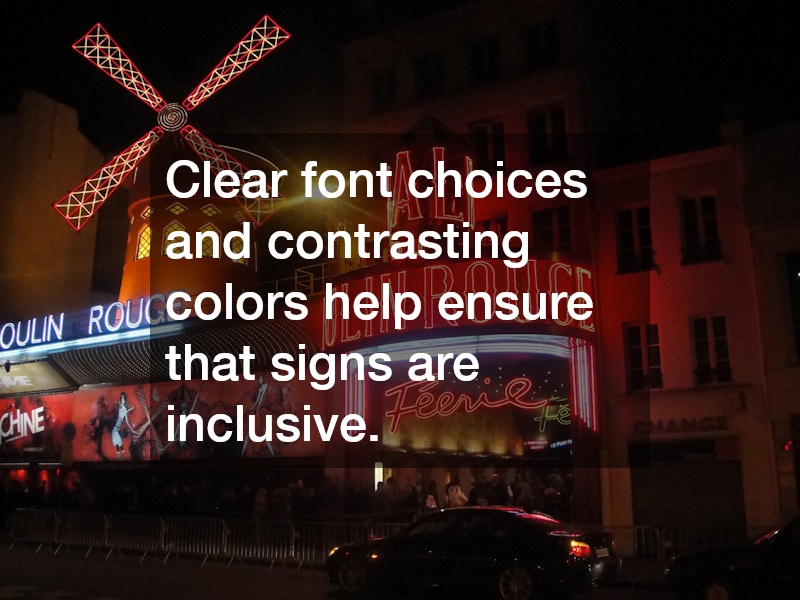
Accessibility is also significant, considering all potential customers, including those with visual impairments. Clear font choices and contrasting colors help ensure that signs are inclusive and easily readable by everyone.
Branding and Customization
Incorporate brand elements such as logos, colors, and slogans to ensure the sign aligns with overall marketing efforts. Customization tailored to specific business goals facilitates effective communication and strengthens branding. Well-designed signage can be a powerful tool in building and maintaining a recognizable brand identity.
Brand consistency across signage reinforces consumer confidence and recognition. Elements like color schemes and typefaces should adhere to branding guidelines that resonate throughout other marketing collateral.
Choosing the right business signs involves understanding types, materials, and design factors that align with your brand and budget. By carefully considering these elements, businesses can create impactful signs that attract and retain customers. Effective signage translates to powerful marketing, fostering brand visibility and customer engagement.
Investing in well-planned signage strategies contributes not only to improved customer traffic but also to sustained brand growth and recognition. Addressing specific preferences and business needs through chosen sign types and designs solidifies market presence. Ultimately, the right signage offers enduring advantages as a versatile marketing asset.